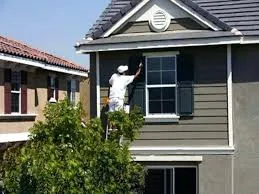
Boston winters, wet springs and salt air near the harbor are hard on exterior paint. Most houses here are wood, often three stories tall on a narrow lot, with many layers of old paint. We wash, scrape, prime bare wood, caulk and apply two finish coats, and we schedule the work for the dry months from late spring to early fall.
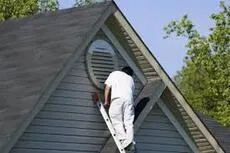
Most houses we paint outside in Boston are wood, three stories high and a few feet from the house next door. Clapboard and cedar shingle are the common sidings, with wide corner boards, brackets, bays and stacked porches. Reaching the top floor on a narrow lot takes planning: where ladders or staging can stand, how the neighbor's driveway and plantings are protected, and whether any part of the setup sits on the public sidewalk, which the city may require a permit to occupy.
Paint fails here for clear reasons. Water gets behind it at open joints, freezes, and lifts it off the wood. South and west walls bake in summer, and houses in East Boston, South Boston and along Dorchester Bay take salt-laden wind. So the prep is most of the job. We wash the walls, scrape everything loose, sand the edges, prime bare wood, replace failed caulk and fix soft spots in trim before two finish coats go on.
Exterior work in Boston runs from about May into October, when the wood is dry and nights stay mild enough for paint to cure. Rain days are normal, so we give a start window instead of promising a fixed finish date. Because nearly every house here predates 1978, old layers are treated as possible lead paint and scrapings are caught on ground sheets and removed. In Beacon Hill, the Back Bay and other historic districts, exterior colors may need commission approval first.
Exterior painting in Boston: common questions
How do you paint the side of a triple-decker that is three feet from my neighbor?
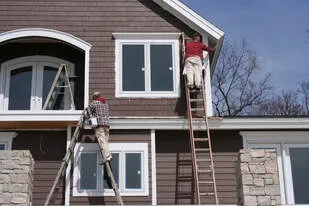
With ladders or narrow staging set on our side where it fits, and with the neighbor's permission where we need to stand on their property. We look at access during the estimate and tell you what we need to arrange.
Why is the paint on my Boston house peeling down to bare wood?
Usually moisture. Water enters at open joints, failed caulk or from inside the wall, then pushes the paint off. We look for the source during the estimate, because new paint over a wet wall will peel again.
Do I need approval to change my exterior color in a historic district?
In districts such as Beacon Hill, changes visible from a public way are reviewed by the district commission. Check with the Boston Landmarks Commission office for your address before you settle on a color. Outside those districts no approval is needed.
How it works
- Free estimate: Call, text or book online. We walk the job and measure.
- Written quote: Prep, paint and price in writing.
- Prep & protect: We cover floors and furniture, repair and prime surfaces.
- Paint & walk-through: Two coats, clean lines, full clean-up and a final walk-through.